
Portfolio Building Program for Ages 11 and Up
2026/27 Fall, Spring
Flexible start times every 30 minutes
Examples: 3:00–4:30, 3:30–5:00 etc. (Also applies to Wednesdays 2–6 PM.)
Missed class policy:
Each student may miss 1 class per every 4 lessons. Make-ups must be done during the same session, except if you miss the last class — then you can make it up the following week. Call Chris to book make-ups. No drop-in make-ups. Schedule at least 24 hours in advance.
Instructors
Drawing and Painting with instructor and founder Chris Babcock, published children’s book author (Random House, Scholastic), working portrait artist, portrait work is in private collections all over the US and Canada, 30 years of art teaching experience.
Weaving and Sculpting with Instructor Mookie Margolis, BA in Textiles, Sculpture and Painting at California College of the Arts 2026, working artist, artwork shown in group gallery shows from 2022 to present, 14 years art teaching experience.
The Portfolio Building Program
Chris Babcock and Mookie Margolis help talented young artists (grades 6 and up) improve their skills and create portfolios for top private high schools, Ruth Asawa School of the Arts (SOTA), College Art Schools and outstanding private and public universities with world class art departments. Classes can be schedule twice a week (1.5 hours for each of the two days) or once a week (3 hours) for 8 weeks.
Tuition
$1,299
Deadline for RUTH ASAWA SCHOOL OF THE ARTS (SOTA) three required assignments DUE BY DEC. 11, 2026 at 5 PM.
Click on the link below to find your child’s one department they want to be in:
Visual Arts, Architecture and Design or Technical Theater
https://www.sfusd.edu/school/ruth-asawa-san-francisco-school-arts/admission-2027-28-school-year/audition-assignment
Over the four years we transformed our art studio into a nonprofit school, every portfolio student Chris Babcock taught was admitted to their top private school choice or to Ruth Asawa High School of the Arts.
For middles school and high school students: 6th, 7th, 8th, 9th, 10th, 11th and 12th grade
Skill level: beginner, intermediate and advanced
Supplies included: Prismacolor pencils, 42 soft pastels, drawing paper, full set of sketching pencils (HB–9H), acrylics, oils, gouache, and quality multi‑media paper.
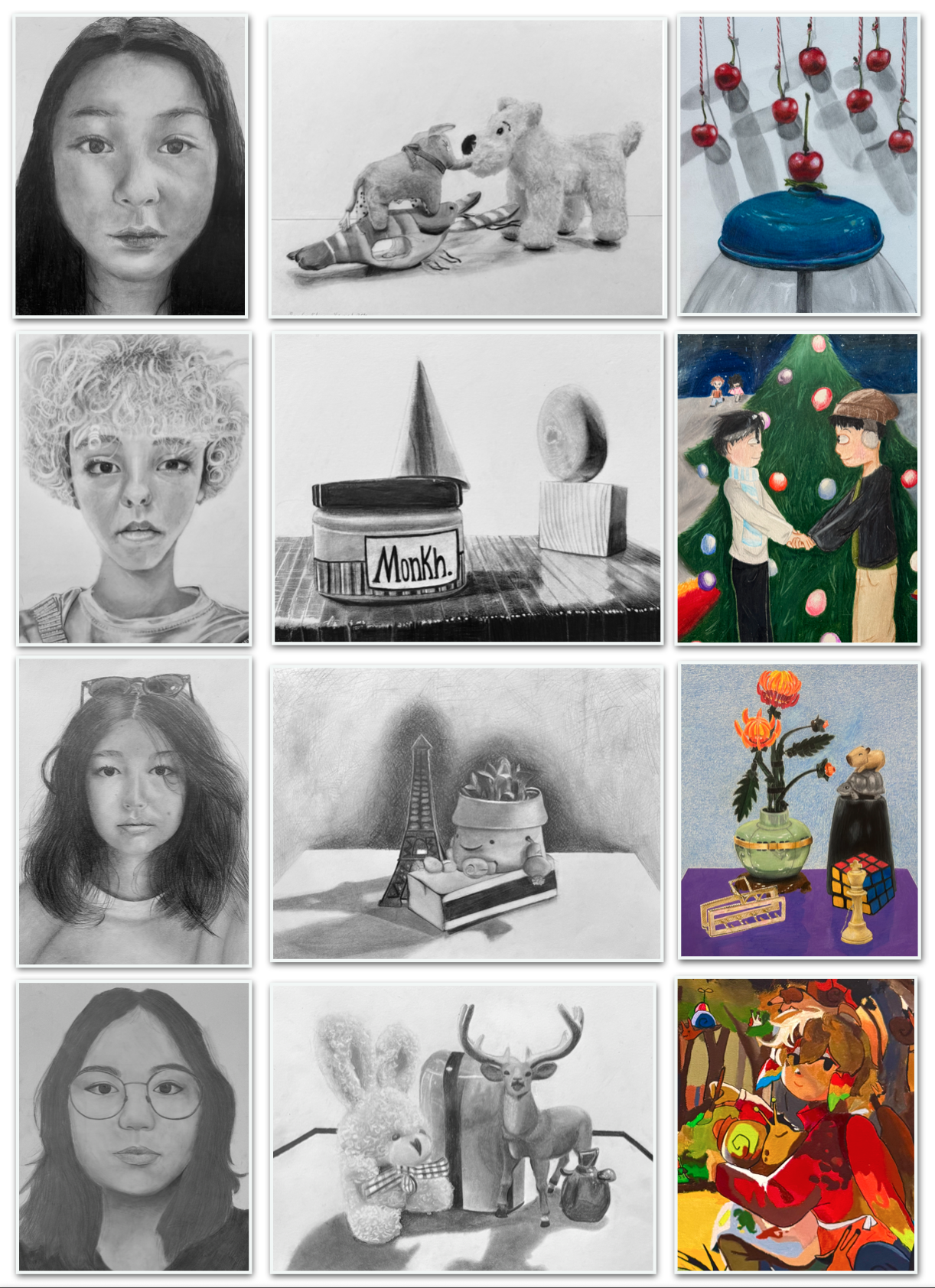
Congratulations to our four portfolio students who all got into their chosen high schools with the standout artwork they made at Chris Babcock Art Prep!
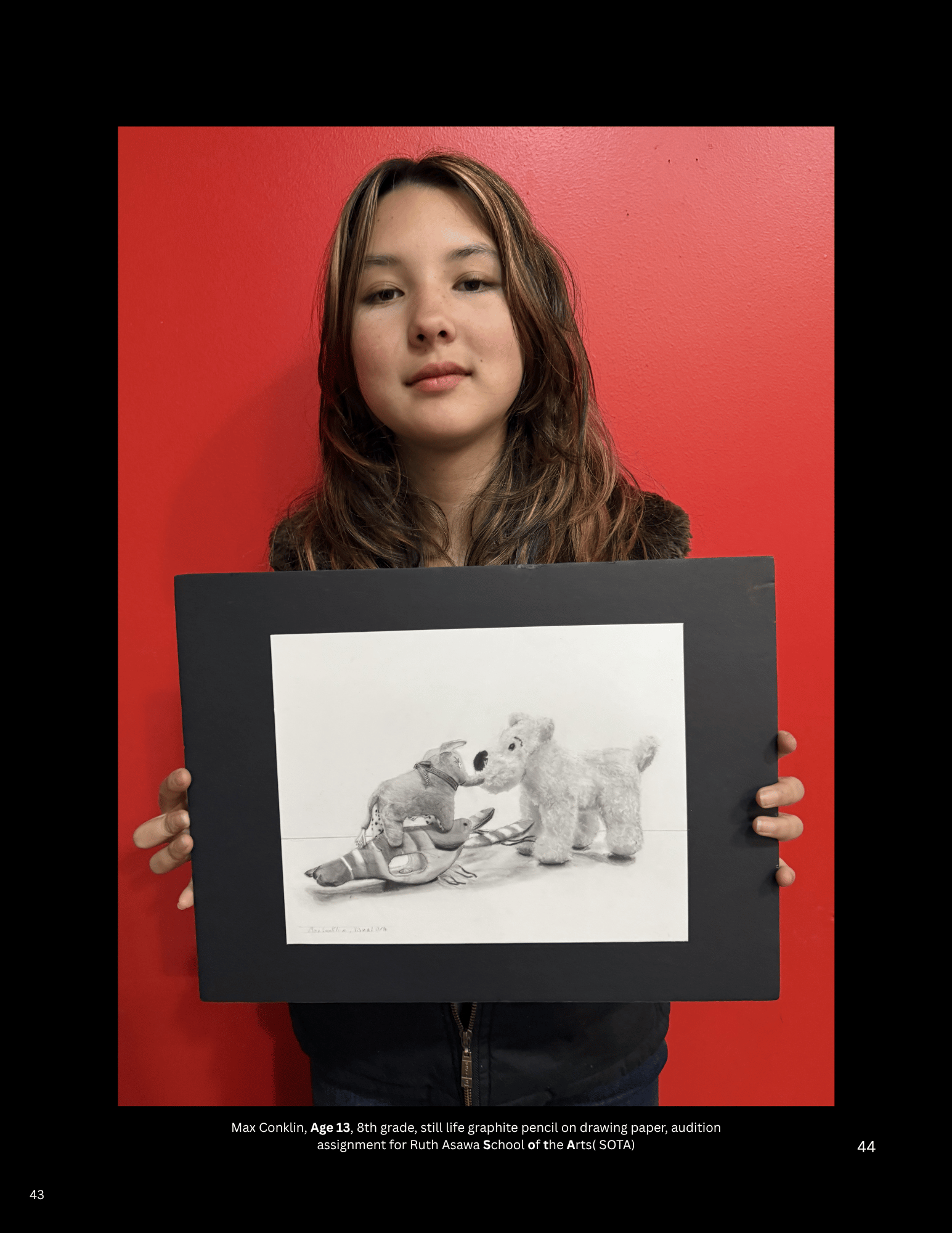
Massive Kudos to Max C. (first row of drawings above) — her three strong drawings and great audition earned her a spot in SOTA’s Fall 2026 Visual Arts Program which has a 18 % acceptance rate. Max’s work is confident and curious: bold contours, thoughtful shading, and selective detail create clear focal points. She balances space and texture so each piece breathes. Together they reveal a playful, disciplined visual voice and the technical skill that will help her thrive at SOTA.
Gigantic congratulations to Veronica G. (second row of images above) — three bold, confident pieces from Veronica won her a spot at her dream high school, SOTA. Her work shows a fearless sense of composition and a clear, personal voice that stood out in the portfolio review. We’re so proud of Veronica’s dedication and the expressive risks she took to tell her stories through art.
Huge congrats to Maya N. (third row of artwork above) — Maya earned admission to her top-choice school, CATE, the boarding school in Carpinteria, CA which has a 17 % acceptance rate. Her portfolio demonstrates impressive technical control, thoughtful color choices, and a mature artistic perspective that reflects hours of focused practice. Maya’s achievement is a testament to her hard work and the strength of her creative vision.
Big cheers for Manon S. (fourth row) — accepted to their first choice at Rosedale Heights School of the Arts in Toronto, Canada! Manon’s pieces combine sensitive observation with playful experimentation, resulting in work that’s both heartfelt and original. We can’t wait to watch her creativity flourish in such an inspiring program. We’re so proud of all our portfolio-building students for following their passions and taking this next step. Congratulations to Max, Veronica, Maya, Manon — onward to new studios and exciting creative journeys!
Session Dates:
IMPORTANT NOTE: SOTA AUDITION ASSIGNMENTS ARE DUE BY DEC. 11, 2026 at 5 PM
Session 1 Sept. 15 – Nov. 8, 2026
Session 2 Nov. 10 – Jan. 3, 2027 IMPORTANT NOTE: NO CLASS on Nov. 24, 25, 26 &Dec. 22-29
Session 3 Jan. 5 - Feb. 28, 2027
Session 4 March 2 – April 25, 2027
Portfolio Building Schedule 2026-2027. IMPORTANT NOTE: If you missed signing up by the deadline for the any session, you can still join the session. Choose the dates you want and put them on the registration form when asked which days or day of the week your child will take their art lessons. When we receive you registration form and payment, we will send you an email confirming the dates you have chosen. All students are expected to show up on the dates chosen. Each student is allowed to miss two 1.5 hour lesson per 8 weeks with no charge, but the lessons must be made up within the time frame of the 8 weeks you signed up for. You can take classes two 1.5 hour lessons twice a week or you can take one 3 hour lesson once a week.
2026-27
Session 1
Start: Sept 15th
End: Nov 8th
Session 2 Skips Thanksgiving and Winter Breaks
Start: November 10th
End: January 24th
Session 3 (Skips Weeks: Feb 16-20)
Start: January 26th
End: March 28th
Session 4
Start: March 30th
End: May 23rd
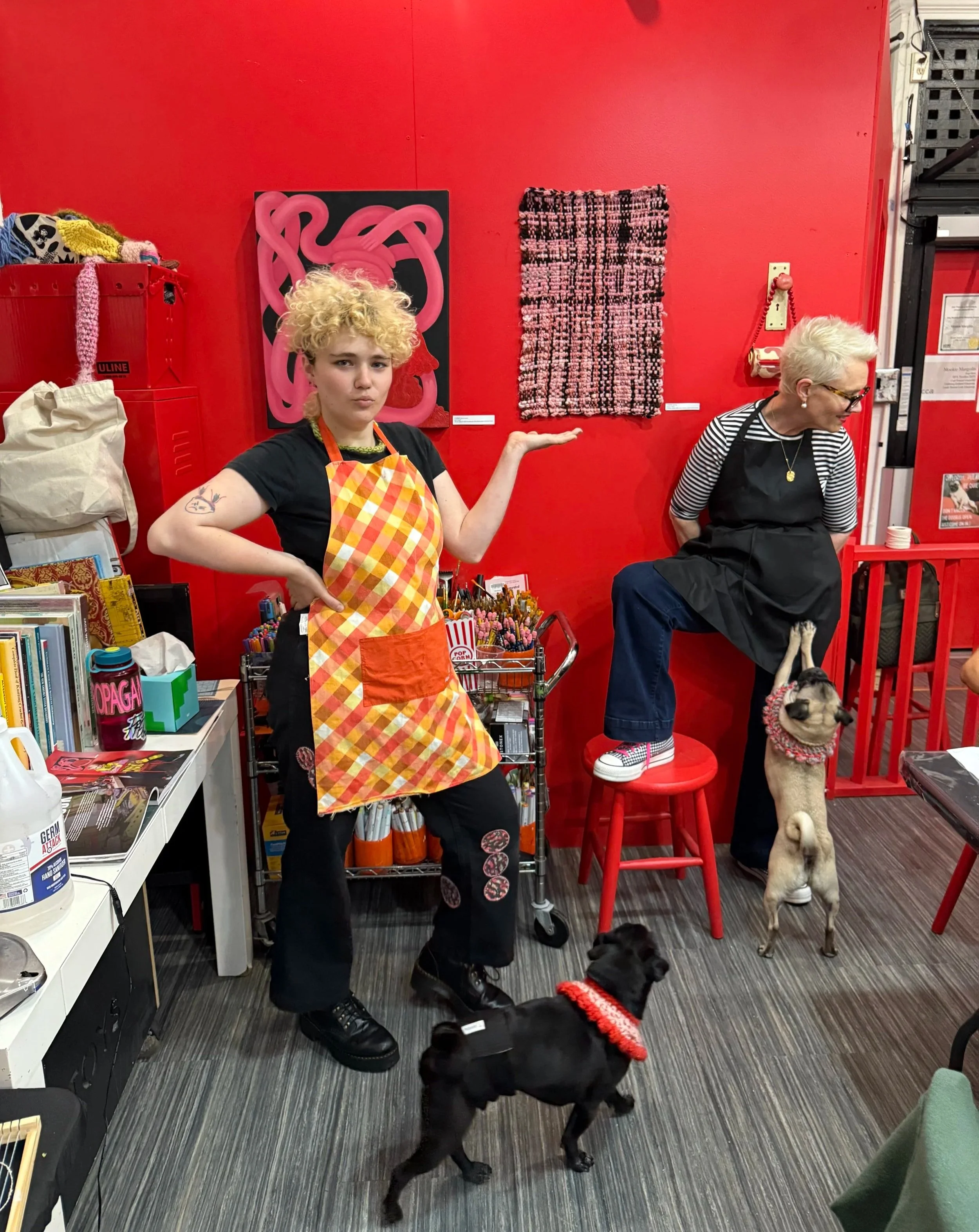
Instructors Mookie Margolis & Chris Babcock with emotional support pugs!
CURRICULUM IMPROVEMENTS:
Technical Skills, Artistic Voice, and Resilient Imagination
A Curriculum for Artists at Every Skill Level
At Chris Babcock Art Prep, we welcome beginners, intermediate students, and advanced artists. Students do not need to arrive with polished skills or an established portfolio. They simply need to be curious, willing to learn, and ready to participate.
Our curriculum has a twofold mission:
To teach students the technical skills and visual vocabulary they need to create meaningful, visually compelling artwork.
To cultivate courageous curiosity and resilient imagination—the confidence to explore, make mistakes, reflect, revise, and continue creating.
The Seven Elements of Art
Students will learn how the seven elements of art can make an artwork visually compelling and help it express an idea, a feeling, or both.
Line and line variety create movement, energy, rhythm, direction, emphasis, and emotion. Students learn to vary the thickness, length, direction, texture, and character of their lines. Delicate, bold, curved, angular, broken, controlled, and energetic lines can each communicate something different.
Shape is a flat, two-dimensional area with height and width. Geometric and organic shapes can organize a composition, create patterns, represent objects, carry symbolic meaning, and guide the viewer’s attention.
Form has—or appears to have—height, width, and depth. Form gives an object volume, weight, structure, and a sense of three-dimensional presence. In drawing and painting, artists create the illusion of form through value, shading, and perspective.
Color establishes mood, creates emphasis, suggests temperature, unifies a composition, and communicates emotion. Relationships among colors can create harmony, contrast, energy, or tension.
Texture describes how something feels or appears as though it would feel. Actual and implied textures can make artwork more sensory, believable, expressive, inviting, or unexpected.
Space describes the areas within, around, between, and behind objects. Positive and negative space can create balance, focus, depth, distance, closeness, openness, isolation, or movement.
Value describes how light or dark a color or area appears. Changes in value create contrast, atmosphere, emphasis, depth, drama, and the illusion of three-dimensional form.
Students will learn these elements as practical tools—not as a checklist that must be included in every artwork. They will consider which elements best support the meaning, mood, and visual impact of each individual piece.
Artist Statements: Discovering Deeper Meaning
Students will learn to write age-appropriate artist statements about selected artworks and projects.
An artist statement is not simply a description of a finished artwork. It is also a reflective tool that can bring an artist closer to the deeper meaning of what they have created.
By writing about their images, materials, colors, memories, emotions, and artistic decisions, students may begin to recognize connections and ideas they did not fully understand while making the work. Sometimes an artwork’s meaning is clear from the beginning. At other times, meaning emerges gradually through experimentation, reflection, and the creative process.
Students will be encouraged to consider questions such as:
What inspired this artwork?
What idea, emotion, memory, or question was I exploring?
Why did I choose these particular images and materials?
Which elements of art are most important to this piece?
How do my choices of line, shape, form, color, texture, space, and value influence its mood or meaning?
What surprised me while I was working?
What challenges or mistakes changed the direction of the artwork?
What did I discover about the artwork—or about myself—while making it?
What questions do I want the viewer to continue considering?
Students will not be required to explain every choice or mention all seven elements in every statement. Instead, they will identify the elements and decisions that are most significant to that particular artwork.
Narrative, Mystery, and Interpretation
Students will learn that artwork can contain both narrative and mystery. An artwork may communicate a recognizable story, capture a single moment, express an emotion, investigate an idea, or leave important questions unanswered.
Film is a time-based art form. A filmmaker guides the audience through an arranged sequence of images, sounds, actions, and pauses. Even when an art film is mysterious or ambiguous, the filmmaker controls the order and duration of the experience.
A painting, drawing, or sculpture is experienced differently. It presents images, forms, and materials within a visual or physical space. Viewers generally decide where to look first, what to examine next, and how long to remain with the work. A single artwork may suggest something that happened before or after the moment depicted, but the viewer is invited to imagine the missing parts.
Entertainment films often emphasize an accessible narrative and an engaging emotional experience. Art films may place greater emphasis on atmosphere, visual language, symbolism, experimentation, and ambiguity. These categories can overlap: an entertaining film can also be a profound work of art, and an art film can be deeply entertaining.
In the same way, visual artwork can communicate a strong idea without telling viewers exactly what they must see, feel, or believe. Mystery, ambiguity, contradiction, and surprise invite viewers to pause, wonder, and form their own relationships with the work.
An effective artist statement should open a door into the artwork without closing the door on the viewer’s imagination. It can reveal the artist’s intentions, influences, materials, questions, and creative choices while preserving space for personal interpretation.
Responding to Feedback with Confidence
Writing and discussing artist statements will also help students develop the language to speak about their creative choices with greater clarity and confidence.
When students receive criticism or constructive feedback, our goal is not to teach them to defend every decision or reject another person’s perspective. Instead, we teach them to:
Listen thoughtfully without immediately giving up on their ideas.
Ask questions when feedback is unclear.
Decide which observations may help the artwork grow.
Explain their intentions without becoming defensive.
Recognize that different viewers may interpret the same artwork differently.
Revise when revision strengthens the work.
Continue creating without allowing one person’s opinion to determine their worth or silence their imagination.
The goal is not to make students immune to criticism. It is to help them separate their personal worth from an evaluation of one artwork, remain curious about other perspectives, and make thoughtful decisions about their own creative direction.
Developing Lifelong Creative Habits
Through technical instruction, experimentation, reflection, artist statements, and supportive critique, we want students to develop habits they can carry into art and every other meaningful challenge they pursue:
The curiosity to ask questions and search for deeper meaning.
The courage to experiment, take creative risks, and express an original point of view.
The self-awareness to understand and explain their choices.
The discernment to recognize useful feedback without surrendering their artistic voice.
The resilience to learn from mistakes, revise their work, and keep going.
Our long-term goal is for students to be able to draw upon these qualities naturally and confidently whenever they encounter a creative challenge.
A Focused and Supportive Studio
Our After-School Art Studio is designed for young artists who genuinely want to learn and are ready to participate in a focused studio environment. Students do not need advanced skills, but they must be willing to make an honest effort, respect the learning process, and allow other artists to concentrate.
The program may not be the right fit for children who must be repeatedly persuaded to participate or whose behavior consistently prevents others from learning. Please review our Studio Expectations and Behavior Policy for additional information.
Responding to Insults and Bullying About Artwork
Students will learn the important difference between constructive criticism and cruelty.
Constructive criticism addresses the artwork respectfully and offers an observation, question, or suggestion that the artist may consider. Statements such as “Your artwork sucks,” “It’s ugly,” or “That’s stupid” are not constructive criticism. They are insults intended to embarrass, discourage, or hurt the artist.
An artist statement can help students remain connected to their ideas and understand why their work matters to them. However, students are never required to explain or defend their artwork to someone who is treating them disrespectfully.
If a student feels safe responding, they may calmly say:
“You do not have to like my artwork, but you may not speak to me that way.”
“That is an insult, not constructive feedback.”
“If you have a respectful question about my artwork, I will answer it.”
“I am proud that I tried something original.”
Students will also learn that courage does not mean remaining in an unsafe or humiliating situation. They may end the conversation, walk away, and seek help from a teacher, counselor, parent, or another trusted adult. They should not insult the other student in return or attempt to handle repeated bullying alone.
If the comments continue, become threatening, appear online, involve damage to the artwork, or cause the student to feel unsafe, the student should document what happened and report it to a trusted adult immediately.
Resilient imagination does not mean pretending that cruel words do not hurt. It means recognizing that another person’s insult is not a truthful measurement of the artwork—or of the artist—and finding the support and courage needed to continue creating.
Parents and guardians, please review these expectations with your child before every class. Children often need consistent reminders before respectful studio behavior becomes a natural habit—just like learning to say “please” and “thank you.”
Studio Expectations
Remain seated in your assigned seat unless a teacher gives you permission to get up.
Raise your hand when you have a question, need assistance, or would like permission to leave your seat.
Respect each student’s individual consultation time. Please wait patiently while the teacher is assisting another student. The teacher will help you as soon as they are available.
Do not run through the studio, shout, talk loudly, or distract other artists while they are concentrating.
Consequences for Disruptive Behavior
If a student significantly disrupts the class again after receiving a formal warning, we will meet with their parent or guardian to discuss the behavior and create a clear plan for improvement. We want to give every student a reasonable opportunity to succeed while protecting the learning environment for the entire class.
If the disruptive behavior continues after that meeting and reasonable efforts to support the student, we may end the student’s enrollment. A student may also be dismissed immediately if their behavior creates a serious safety concern or makes it impossible for the class to continue safely.
Families remain responsible for lessons the student has already attended. If Chris Babcock Art Prep ends the student’s enrollment, any prepaid tuition for unused lessons will be refunded.
Our intention is never to shame or punish a child. Our responsibility is to help students learn respectful studio behavior while ensuring that every artist can work in a calm, safe, and supportive environment.
Five-Minute Pug Breaks
If you feel stressed, overwhelmed, or tired and would benefit from a little comfort or an energy boost, please raise your hand and ask permission to take a five-minute pug break.
With a teacher’s permission—and if the pug is comfortable—you may quietly spend a few minutes petting or sitting beside one of our emotional-support pugs.
Please do not chase, follow, corner, or pick up the pugs. Just like people, our pugs need to feel safe and have their personal space respected. A teacher will help you approach them calmly and kindly. If a pug walks away or does not want attention, please allow them to rest.
Bathroom and Sink Etiquette
You do not need to ask permission to use the restroom, but you must tell a teacher before leaving the studio so that we know where you are and that you have not left the building.
Use the kitchen sink outside the bathroom to wash paint from your hands and arms.
Use the bathroom sink only for normal handwashing after using the restroom.
Do not wash paint from your hands, arms, brushes, or art materials in the bathroom sink. The bathroom is shared by students, parents, and guests and must be kept clean.
The kitchen sink is reserved for students washing art materials and paint-covered hands. Parents and guests should use the bathroom sink for ordinary handwashing.
Thank you for helping us maintain a safe, peaceful, and inspiring studio where every student has the opportunity to learn and thrive.